João Fagulha
AI in clinical decision-making in endodontics | Endodontic instrumentation in the era of Artificial Intelligence: from treatment planning to assisted execution current reality and near future
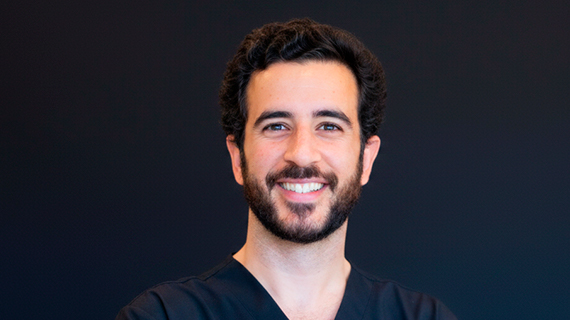
- Integrated Master's in Dentistry, Faculty of Medicine, University of Coimbra (2013).
- Four-Module Endodontics Program, EndoAcademy (2013).
- Postgraduate Course in Endodontics, 8th Edition (January 2017 – January 2018).
- Key Opinion Leader for VDW (2018–2020).
- Lecturer in the Course on Endodontic Instrumentation and Obturation — Portuguese Dental Association (Ordem dos Médicos Dentistas), Continuing Education Program (2020).
- Endodontics Course Instructor, Insidendo (2019–present).
- Bondent Key Opinion Leader (2021–Present), delivering national and international courses.
- Invited speaker in the Postgraduate Endodontics Program, Instituto Universitário de Ciências da Saúde – CESPU in 2021 e 2023.
- Invited speaker at the NEAB 2024 International Congress, Salvador da Bahia, Brazil.
- Invited speaker in the Master’s Degree in Endodontics at the University of Madrid, UCAM (2024–present).
Nationality: Portugal
Scientific areas: Endodontics
Auditório B
Conference summary
The integration of artificial intelligence (AI) into Dentistry is transforming the approach to endodontic treatment by providing new tools to support clinical decision-making, treatment planning, and procedural execution.
Conventional radiographic methods (periapical radiographs) have limitations, particularly in the detection of periapical lesions. The use of cone-beam computed tomography (CBCT) has become essential for improving diagnostic accuracy. In this context, artificial intelligence has emerged as a promising tool in Endodontics.
AI models have demonstrated significant potential in the analysis of imaging examinations, including CBCT scans and periapical radiographs, enabling more accurate identification of root canal anatomy, detection and classification of periapical lesions, assessment of morphological complexity, and recognition of potential technical challenges.
Beyond diagnosis and treatment planning, advances in machine learning algorithms and computer-assisted navigation systems are paving the way for safer, more predictable, and minimally invasive endodontic instrumentation. These technologies may assist clinicians in selecting the most appropriate instrumentation protocol, preserving dental structure, and reducing the risk of iatrogenic errors.
This lecture aims to provide an overview of the role of artificial intelligence in endodontic treatment, addressing its current applications, clinical benefits, existing limitations, and future perspectives. The most recent scientific evidence will be discussed, together with challenges related to clinical validation, the integration of different digital technologies, ethical considerations, and the need for continuous professional supervision.
In conclusion, artificial intelligence represents a powerful tool to support clinicians throughout all stages of endodontic treatment, from treatment planning to procedural execution, improving predictability, safety, and treatment personalization. However, its implementation should complement, rather than replace, the clinician's judgment and professional expertise.
Conventional radiographic methods (periapical radiographs) have limitations, particularly in the detection of periapical lesions. The use of cone-beam computed tomography (CBCT) has become essential for improving diagnostic accuracy. In this context, artificial intelligence has emerged as a promising tool in Endodontics.
AI models have demonstrated significant potential in the analysis of imaging examinations, including CBCT scans and periapical radiographs, enabling more accurate identification of root canal anatomy, detection and classification of periapical lesions, assessment of morphological complexity, and recognition of potential technical challenges.
Beyond diagnosis and treatment planning, advances in machine learning algorithms and computer-assisted navigation systems are paving the way for safer, more predictable, and minimally invasive endodontic instrumentation. These technologies may assist clinicians in selecting the most appropriate instrumentation protocol, preserving dental structure, and reducing the risk of iatrogenic errors.
This lecture aims to provide an overview of the role of artificial intelligence in endodontic treatment, addressing its current applications, clinical benefits, existing limitations, and future perspectives. The most recent scientific evidence will be discussed, together with challenges related to clinical validation, the integration of different digital technologies, ethical considerations, and the need for continuous professional supervision.
In conclusion, artificial intelligence represents a powerful tool to support clinicians throughout all stages of endodontic treatment, from treatment planning to procedural execution, improving predictability, safety, and treatment personalization. However, its implementation should complement, rather than replace, the clinician's judgment and professional expertise.