Joana A. Marques
Problem solving | Adhesive rehabilitation of endodontically treated teeth: a new paradigma
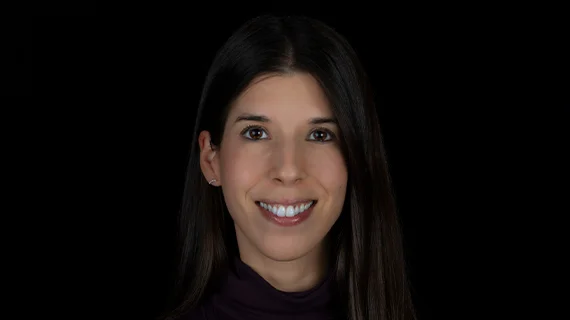
- Dentist registered with the Portuguese Dental Association (OMD), professional license number 11050.
- Integrated Master’s Degree in Dentistry from the Faculty of Medicine, University of Coimbra (FMUC).
- PhD from the Doctoral Programme in Health Sciences, FMUC.
- Invited Assistant Lecturer at the Institute of Paediatric and Preventive Dentistry, FMUC.
- Collaborating Member of the Center for Innovation and Research in Oral Sciences (CIROS), FMUC.
- Member of the General Council of the OMD.
- Member of the OMD Working Group on Studies and Surveys in Dentistry.
- Vice-president for the Central Region of the Portuguese Society of Endodontology (SPE).
- Vice-president of the Gen Z Committee of the European Academy of Digital Dentistry (EADD).
Nationality: Portugal
Scientific areas: Operative Dentistry
Auditorium A
Conference summary
In contemporary oral rehabilitation, the restoration of endodontically treated teeth remains a major clinical challenge.
The long-term prognosis depends not only on adequate chemomechanical preparation and three-dimensional obturation, but critically on the quality of the coronal seal and on restoring function, esthetics, and biomechanical resistance while preserving the remaining tooth structure.
Despite significant advances in restorative materials and techniques, restorative failure remains one of the leading causes of unsuccessful endodontic treatment.
The conventional clinical sequence places the definitive adhesive restoration at the end of the workflow, after completion of the endodontic treatment.
This approach determines the condition of the substrate to which we ultimately bond. During endodontic procedures, coronal dentin is exposed to irrigants, intracanal medicaments, temporary materials, and endodontic sealers.
Although indispensable to endodontic success, these agents modify the characteristics of dentin and may compromise the predictability of the adhesive interface.
The substrate available for the final restoration therefore differs substantially from the freshly cut dentin first exposed at access.
Within this context, pre-endodontic dentin sealing has been suggested. The technique proposes sealing the coronal dentin immediately after access cavity preparation and before chemomechanical preparation begins.
Adhesion is thus performed on freshly cut coronal dentin, when the substrate is most favorable, while protecting it from contamination during the subsequent endodontic treatment. The rationale is threefold: to preserve the dentin substrate, to optimize the adhesive interface, and to enhance restorative predictability.
This lecture dissects a new paradigm in adhesive rehabilitation of endodontically treated teeth, addressing its biological rationale, the current scientific evidence, and the potential clinical advantages of its application.
As a main focus, a step-by-step clinical protocol will be presented, clarifying when, why, and how pre-endodontic dentin sealing can be integrated into the endodontic-restorative workflow.
The long-term prognosis depends not only on adequate chemomechanical preparation and three-dimensional obturation, but critically on the quality of the coronal seal and on restoring function, esthetics, and biomechanical resistance while preserving the remaining tooth structure.
Despite significant advances in restorative materials and techniques, restorative failure remains one of the leading causes of unsuccessful endodontic treatment.
The conventional clinical sequence places the definitive adhesive restoration at the end of the workflow, after completion of the endodontic treatment.
This approach determines the condition of the substrate to which we ultimately bond. During endodontic procedures, coronal dentin is exposed to irrigants, intracanal medicaments, temporary materials, and endodontic sealers.
Although indispensable to endodontic success, these agents modify the characteristics of dentin and may compromise the predictability of the adhesive interface.
The substrate available for the final restoration therefore differs substantially from the freshly cut dentin first exposed at access.
Within this context, pre-endodontic dentin sealing has been suggested. The technique proposes sealing the coronal dentin immediately after access cavity preparation and before chemomechanical preparation begins.
Adhesion is thus performed on freshly cut coronal dentin, when the substrate is most favorable, while protecting it from contamination during the subsequent endodontic treatment. The rationale is threefold: to preserve the dentin substrate, to optimize the adhesive interface, and to enhance restorative predictability.
This lecture dissects a new paradigm in adhesive rehabilitation of endodontically treated teeth, addressing its biological rationale, the current scientific evidence, and the potential clinical advantages of its application.
As a main focus, a step-by-step clinical protocol will be presented, clarifying when, why, and how pre-endodontic dentin sealing can be integrated into the endodontic-restorative workflow.