Francisco Azevedo Coutinho
Analgesic management by surgical procedure in dentistry
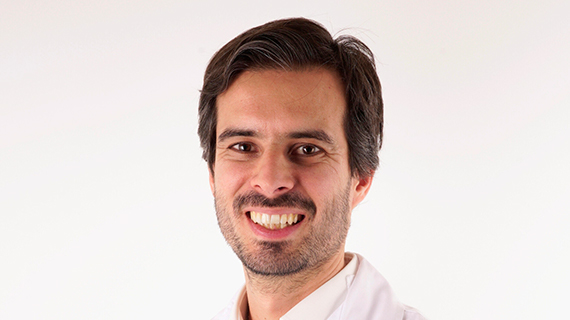
- Master's Degree in Medicine, Faculty of Medical Sciences, Universidade Nova de Lisboa, 2014.
- Residency in Stomatology, Centro Hospitalar Universitário de São João (Porto), 2016–2020.
- Consultant in Stomatology (2021 – present) – University Clinic of Stomatology, Unidade Local de Saúde de Santa Maria.
- Lead clinician for the Orthognathic Surgery and Sleep Medicine outpatient clinic; Co-lead for Craniofacial Malformations and Cleft Lip and Palate at Unidade Local de Saúde de Santa Maria.
- Invited Assistant Professor, Faculty of Medicine, University of Lisbon.
- Invited speaker and trainer at multiple courses and conferences in the fields of Craniofacial Malformations, Orthognathic Surgery and Sleep Medicine.
- Private practice at Clínica Dr. Pedro Paul, Porto, and at Instituto Português da Face, Lisbon.
Nationality: Portugal
Scientific areas: Therapeutics and pharmacology
Room 1
Conference summary
Postoperative pain is one of the main concerns for patients following dental procedures, directly influencing recovery, satisfaction and treatment adherence. Nevertheless, analgesic management remains frequently empirical and poorly tailored to the specific procedure performed.
This presentation aims to propose a rational, evidence-based approach to pain control in oral surgery, grounded in the neurobiological mechanisms of orofacial nociception. The main nociceptive receptors present in different oral tissues — dental pulp, periodontium, soft tissues and alveolar bone — are reviewed, along with the anatomical features of the oral region that influence the intensity and location of perceived pain.
Building on this pathophysiological framework, a stepwise, procedure-specific analgesic protocol is proposed, covering soft tissue surgery, simple and complex tooth extractions, post-extraction alveolar osteitis, implant surgery, guided bone regeneration procedures, and major orofacial surgery.
First-line pharmacological options are discussed, alongside multimodal analgesic combinations and the role of opioids in cases of greater pain intensity. Adjuvant measures with growing evidence are also addressed, including autologous growth factor concentrates, low-level laser therapy and local cryotherapy, as well as the importance of pre-emptive analgesia and preoperative anxiety management.
The ultimate goal is to provide the dental clinician with a clear and adaptable protocol that enables effective anticipation and control of postoperative pain, reduces rescue analgesic consumption and improves the overall patient experience.
This presentation aims to propose a rational, evidence-based approach to pain control in oral surgery, grounded in the neurobiological mechanisms of orofacial nociception. The main nociceptive receptors present in different oral tissues — dental pulp, periodontium, soft tissues and alveolar bone — are reviewed, along with the anatomical features of the oral region that influence the intensity and location of perceived pain.
Building on this pathophysiological framework, a stepwise, procedure-specific analgesic protocol is proposed, covering soft tissue surgery, simple and complex tooth extractions, post-extraction alveolar osteitis, implant surgery, guided bone regeneration procedures, and major orofacial surgery.
First-line pharmacological options are discussed, alongside multimodal analgesic combinations and the role of opioids in cases of greater pain intensity. Adjuvant measures with growing evidence are also addressed, including autologous growth factor concentrates, low-level laser therapy and local cryotherapy, as well as the importance of pre-emptive analgesia and preoperative anxiety management.
The ultimate goal is to provide the dental clinician with a clear and adaptable protocol that enables effective anticipation and control of postoperative pain, reduces rescue analgesic consumption and improves the overall patient experience.