Margarida Nunes
Prevention of complications in orthodontics | Prevention of failure of temporary skeletal anchorage
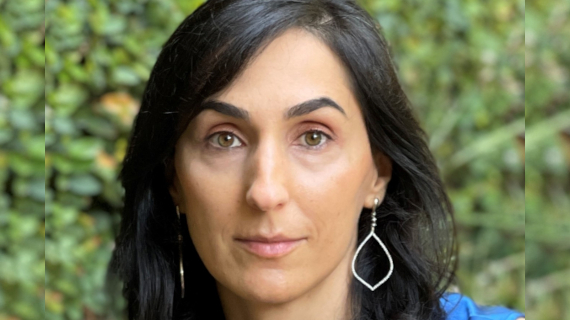
- Dentist, by Faculty of Dental Medicine of the University of Porto, 2009.
- Specialist in Orthodontics by the Portuguese Dental Association, May 2023.
- Specialization in Orthodontics, Faculty of Dental Medicine, University of Porto, 2011-2014.
- Post-Graduation in Orthodontics with Aligners – Invisalign System. CESPU, 2020-2011.
- Advanced Orthodontics Course “Ertty Systems” , 2016-2019.
- INVISALIGN Certification Course, 2017.
- Course on Orofacial Pain and Temporo-Mandibular Dysfunction, 2010.
Nationality: Portugal
Scientific areas: Orthodontics
9 of november, from 09h30 until 10h00
Auditorium C
Conference summary
The use of mini-implants and mini-plates as a temporary skeletal anchorage instrument has been growing in recent years and associated with various orthodontic techniques.
The advantages of their use unequivocally outweigh their disadvantages, and it is essential to follow protocols to optimize results and minimize failures.
The selection of the most suitable anchorage technique and the planning prior to its placement are absolutely essential. Some of the determining factors for success are the choice of its location, taking into account various aspects such as the positioning of the roots of the neighboring teeth, the soft tissues (jugal mucosa and bridles, gingival morphology) and the characteristics of the bone where they are going to be located.
The surgical protocol for the placement of mini-plates is more invasive and complex than for mini-implants, but both have precise characteristics.
The orthodontist should be aware of so for efficient and effective use of this anchorage procedure. Although the success of this anchorage technique is very dependent on the clinician’s skills it is also determined by the characteristics of the mini-implant/mini-plate and the particularities of each patient.