Nélio Veiga
Disease Risk Assessment. Current concept and clinical decision in children and adult patients
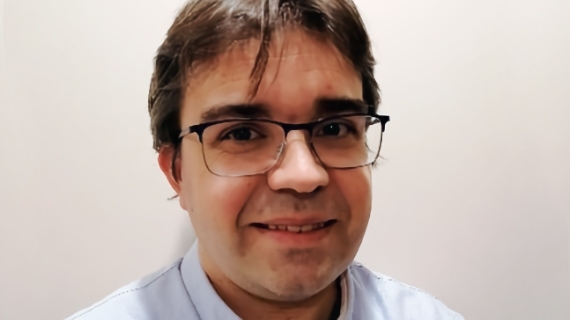
- Degree in Dental Medicine by the Universidade Católica Portuguesa, in 2006
- Master’s degree in Public Health at the Faculty of Medicine of the University of Porto, in 2010
- PhD in Biomedicine from the Faculty of Health Sciences of University Beira Interior, in 2015
- Assistant professor of the Faculty of Dental Medicine of UCP
- Clinical director of the University Dental Clinic UCP, since 2015
- Coordenator of the 2nd cycle of studies of Dental Medicine at FDM UCP
- Researcher at the Centre for Interdisciplinary Research in Health (CIIS) of UCP
Nationality: Portugal
Scientific areas: Preventive oral medicine
6 of november, from 09h00 until 10h20
Auditorium B
Conference summary
Non-treated dental caries is the most prevalent disease and constitutes a major public health issue worldwide in both children and adults. To treat and prevent dental caries, it is essential to know the oral health indicators and the methods for the assessment of associated risk factors. This knowledge allows a more accurate clinical approach focused on the risk factors that increase the probability of disease development, as well as the definition of strategies for the prevention of dental caries. The modern concept of dental caries is characterized as a biofilm-mediated, diet-modulated, multifactorial, non-communicable, dynamic disease and totally preventable, resulting from a dysbiosis caused by the imbalance of multiple cariogenic species triggered by the consumption of sugars. The significant advance in bioactive restorative materials that allow a remineralization and clinical operative techniques/technologies, behaviour management and motivational interviewing, are all enabling oral healthcare teams to deliver successfully this contemporary approach to achieve and maintain oral health and long-term wellbeing. And finally, an increase in the life expectancy of the population makes necessary a change in the concept of caries management, in both the child and adult patient. The main objective of Minimal Intervention Dentistry is tissue preservation, including early caries detection and non-operative treatment, combined with minimally invasive restorative procedures (remineralization, fissure sealants, selective caries removal). The International Caries Classification and Management System has proposed a system following the 4D scheme (Determine, Detect, Decision and Do). In this sense, determining a patient’s caries risk consists of estimating the possibility that a new caries lesion may occur in the future or that pre-existing lesions progress. It is important to “detect” and assess lesions, assessing the activity of caries, “decide” a personalized plan and finally “do” a preventive and tooth preserving intervention with Minimal Intervention Dentistry. Minimum intervention oral healthcare is the approach to patient management where the oral health professionals act as one, providing individualized patient-centered care and advice to encourage the patient to take responsibility for and maintain their own oral health.
Therefore, this presentation will focus on the existing methods for assessing the risk of oral pathology, more specifically dental caries, in order to allow a more effective and preventive clinical performance. During the conference, clinical cases will be presented following a minimal intervention dentistry philosophy.