Tiago Marques
Digital surgical planning: a reality, a hobby, what does the future hold?
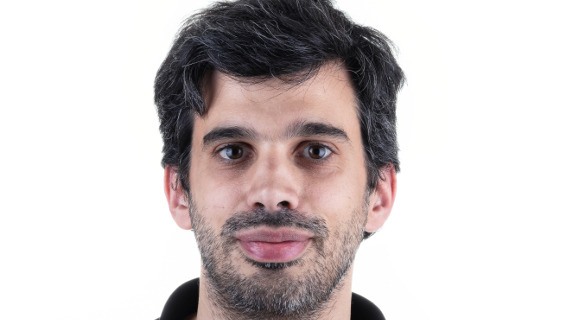
- Specialist in Periodontology
- Periodontology invited lecturer in Universidade Católica Portuguesa
- Oral Medicine invited lecturer in Universidade Católica Portuguesa
- Phd Student Universitat de Barcelona
- ITI Education Week, Boston “Comprehensive Implant Dentistry”
- ITI Education Week, Bern “Evidence-Based Clinical Concepts in Implant Dentistry, University of Bern
- Advanced Course Universität Wien Implant Dentistry and Bone Grafting
- ITI Speaker
Nationality: Portugal
Scientific areas: Oral rehabilitation
15 of november, from 09h30 until 10h00
Auditório A
Conference summary
When combined with traditional treatment planning methods, digital tools can offer a more conservative approach and more predictable final results. The digital technology is rapidly evolving and new developments will enable further improvements in reducing the inaccuracy, allowing to obtain patient data in ways other than traditional recordings. These data may then be processed applying digital techniques providing the clinician with novel ways to integrate relevant patient data. On one hand, this improves diagnosis of the state of health or disease of the patient, and on the other hand, working with these digital data supports planning and execution of the different steps of treatment.
During a limited time, span and with a restricted view, the surgeon has to take numerous decisions while nurturing a conscious patient under aseptic conditions. Therefore, thorough preoperative planning will free the surgeon’s mind, allowing concentrating on the patient and tissue handling.
Integrated digital work-flow allows full integration of therapeutic steps from patient diagnostics and treatment planning to surgery and prosthetic design.