Luís França Martins
Approach to severe bends of the three-dimensional root canal system
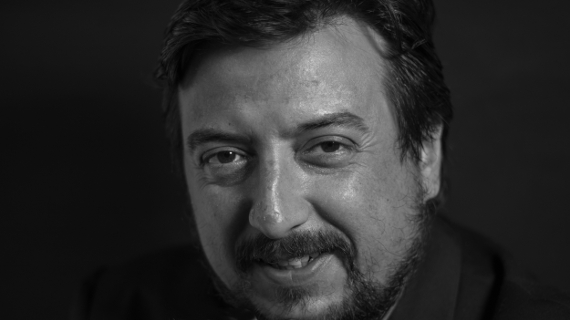
- Obtaining a Degree in Dental Medicine in 2008; and Obtaining the Master’s Degree in Dental Medicine
- University Professor at the Faculty of Health Sciences – UFP, since 2009
- Exclusive clinical practice in the area of Endodontics and Endodontic Microsurgery, from 200
- Official Maillefer Trainer, DENTSPLY, for the European territory
- Diverse participation in meetings, congresses and scientific events, as speaker and speaker, at
- Various participations as lecturer and trainer in Organizations of the Order of Dentists
- Researcher and Content Producer, Medical Informatica Company and Software Development
- Author and co-author of several scientific and research works in the area of Endodontics and Oral Microbiology
Nationality: Portugal
Scientific areas: Endodontics
15 of november, from 17h30 until 18h10
Auditório B
Conference summary
Non-Surgical Endodontic Treatment, major aim is to disinfect the three-dimensional intra-canal space, restore asymptomatic function and maintain the tooth.
The growing awareness of the common existence of root anatomical variations, such as curvatures or lacerations, is due to the improvement in imaging technologies.
Through two-dimensional radiology and the use of specific angulation techniques, we easily perceive the curvatures in the mesial or distal direction, however, curvatures in the vestibular or palatine / lingual sense are extremely difficult to identify. Given the limitations in providing information on the actual geometry of the root canal system, three-dimensional imaging technologies are increasingly a resource used and required in current Dental Medicine.
Root canals that show sharp dilacerations or curvatures will be more prone to the occurrence of intra-canalar blockage by the apical transport of debris, calcifications and pulp tissues, which led to the occurrence of iatrogenic errors such as Perforations and Fracture of instruments, among others.
This presentation focuses on the objective of alerting to the frequent presence of this possibility, as well as ways of identification, classification and prevention of occurrence of errors and resolution thereof.
We will also approach the correct elaboration of a strategy of action adapted to the characteristics of each case, using techniques such as adequate access to channel systems, proper choice of instruments, metal alloys, techniques and systems of instrumentation, irrigation and obturation in this type of clinical cases.