Maria João Ponces
Early class II treatment
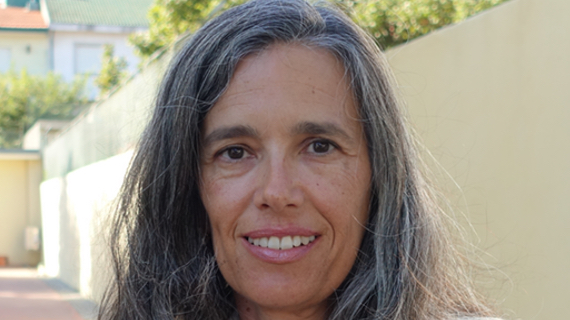
- Auxiliary Professor of Faculty of Dental Medicine of University of Porto
- Specialist in Orthodontics of Portuguese Dental Association
- Chairman of the General Assembly Board of the Portuguese Association of Specialists in Orthodontics
- Member of the General Assembly Board of the Portuguese Society of Dentofacial Orthopedics
- Private practice in Orthodontics
Nationality: Portugal
Scientific areas: Orthodontics
8 of november, from 10h00 until 10h30
Auditório C
Conference summary
In recent years, orthodontic treatment has achieved remarkable advances in knowledge of growth, physiology, tissue response, materials and diagnostic techniques. However, the controversy over early intervention remains particularly conflicting in Class II malocclusion. The literature describes several treatment approaches, with fixed appliances, associated with elastics or headgear and with removable appliances, such as activators, which may also have conjugated the headgear.
We intend to emphasize the use of functional devices combined with extraoral forces in the treatment of growing Classes II patients. In fact, the connection of headgear to the activator is aimed at controlling the undesirable effects of Class II correction, since the effect of the therapy induces a tendency for a posterior rotation of the maxilla and the occlusal plane. Accordingly, stabilization of the nasomaxillary complex will maintain the inclination of the mandibular plane relative to the cranial base and prevent posterior rotation of the mandible. On the other hand, the adequate mandibular response will result in pogonion advancement following the mandibular propulsion induced by the device.
This conference discusses, describes and examine the advantages and disadvantages of this therapeutic approach. A critical analysis of the effects is sought based on the results of presented clinical cases and supported by the scientific literature.