Tiago Neto
Articular disorders: from conservative to surgical treatment
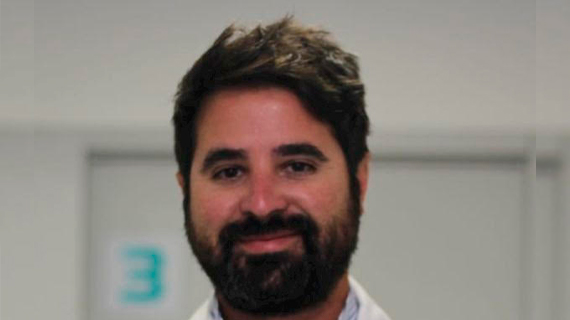
- Graduated in Medicine from the Faculty of Medicine of the University of Coimbra (2008).
- Specialist in Maxillofacial Surgery (2016).
- Practice focused on Orthognathic Surgery, Temporomandibular Dysfunction, Salivary Glands, and Microsurgical Reconstruction.
- Graduate Hospital Assistant in Maxillofacial Surgery at ULS São João, Porto.
- Fellow of the European Board of Oro-Maxillo-Facial Surgery – EBOMFS (2016).
- Member of the European Association for Cranio-Maxillo-Facial Surgery (EACMFS).
- Member of the Portuguese Society of Temporomandibular Dysfunction and Orofacial Pain (SPDOF).
- Member of the Board of the Portuguese Society of Maxillofacial Surgery (SPCMF).
- Member of the Board of the College of Maxillofacial Surgery of the Portuguese Medical Association (2021-2023).
- Author and co-author of several scientific articles and national and international communications.
Nationality: Portugal
Scientific areas: Temporomandibular dysfunction and orofacial pain
7 of november, from 17h30 until 18h45
Auditorium C
Conference summary
Temporomandibular disorders (TMD) are a heterogeneous group of psychophysiological disorders of the stomatognathic system. They include a wide spectrum of clinical, muscular, skeletal and/or related tissue problems, with interaction and relative influence between them, representing the most prevalent chronic orofacial pain condition.
Joint disorders are often manifested by arthralgia (pain), joint noises, movement disorders and mandibular limitation. They involve distinct entities such as articular disc displacements (the most common arthropathy of the TMJ), hypo or hypermobility disorders (adhesions, ankylosis, subluxation, etc.), degenerative diseases (arthritis, arthrosis), fractures, neoplasms and congenital or developmental disorders.
Conservative, non-invasive treatment should be the first approach in most cases, using combined strategies with cognitive-behavioral therapy, occlusal splints, physiotherapy and medication. However, in refractory situations, with progressive worsening, or in pathologies with first-line surgical indication (such as fractures, malformations, severe ankylosis, among others), surgical intervention becomes essential.
The therapeutic decision must, therefore, be based on the correct clinical and imaging evaluation, weighing the risks and benefits of the intervention.
This presentation, in a collaborative format between a Dentist and a Maxillofacial Surgeon, aims to address the most common joint disorders, the respective conservative and surgical approach protocols, and the importance of coordination between different specialties — including collaboration with the physiotherapist — for effective, individualized and integrated management of the pathology.