Sigrid I. Kvaal
Technological Information in the forensic field: dental age assessment
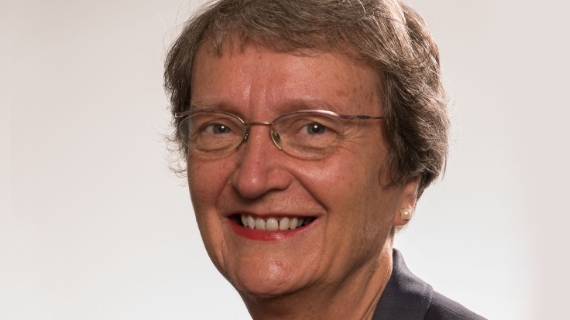
- Sigrid I. Kvaal qualified with a BDS from the University of London, UK, in 1978, and was created Doctor Odontologiae (PhD) at the University of Oslo, Norway, in 1995.
- She was employed by the Faculty of Dentistry, University of Oslo, Norway, from 1988-2021 and has worked in private practice in Oslo for 30 years.
- Sigrid I. Kvaal has worked actively as a forensic odontologist since 1987.
- She has published articles on dental identification, age estimation and oral medicine.
- Since 2001, she has been a member of the Norwegian Identification Commission (DVI).
- She has been a teacher on the IOFOS (International Organization for Forensic Odonto-Stomatology) courses in forensic odontology since and FSAN (The Norwegian Armed Forces Medical Services) courses.
- She has been the project co-ordinator for dental age estimation of unaccompanied asylum seeking children.
- Clinical instructor at the Faculty of Dentistry, Oslo.
Nationality: Noruega
Scientific areas: Forensic Dentistry
7 of november, from 09h00 until 10h30
Room 1
Conference summary
Dental age assessment is asked for in legal and civil cases. It might be age assessment in identification after fatal accidents, in anthropological and archaeological studies, in asylum application, human trafficking or competitive sport.
Computer programs have facilitated the calculations of statistics in age assessment, but they disregard the quality of the study material or the limitation of the results. Attention will be on two common observations.
The first is called age mimicry. This is caused by an uneven number of subjects in each age group. The second relates to the results when applying a regression formula.
In children age assessment is based on development of the deciduous and permanent dentition. The commonly used methods grade the development of different teeth from radiographs.
Several different methods will be presented, and the advantages and pitfalls will be included.
In subadults the assignment might ask if the person is a child or an adult – in other words younger or older than 18 years. In this age group the third molars are the only tooth still developing.
Most commonly, grading of the development of this tooth on radiographs is used, but research also includes using CBCT and MR.
In adults with fully developed teeth the degenerative changes are assessed.
In deceased adult extracted teeth can be examined. In living subjects measurements are made on radiographs or CBCT.