Paul Gerlóczy
Upgrade Zirconia: Can zirconia be considered the all-purpose indirect restorative material?
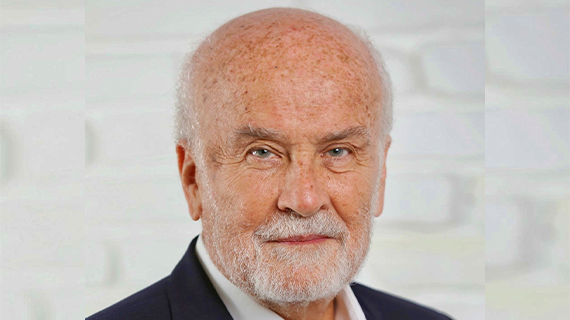
- Dr. Pál Gerlóczy has more than 44 years of professional experience and is one of the most well-known dentists in Hungary in the field of aesthetic dentistry.
- Dr. Gerlóczy began his schooling in Los Angeles, California earning a Bachelor of Arts (BA) degree from California State University and completed his dental studies in Budapest at the Semmelweis University, Faculty of Dentistry.
- He continued his career both as a practicing dentist and as an educator in Los Angeles. Starting in 1982, he worked as a consultant for Xerox Medical Division and also taught at the UCLA School of Dentistry, then, from 1990 onwards, he continued his dental practice in Budapest.
- Since 2007, he has been a faculty member at the University of Szeged, Faculty of Dentistry, and a guest lecturer at the University of Debrecen, Faculty of Dentistry.
- He has delivered numerous lectures and courses both domestically and internationally, with a particular focus on aesthetic dentistry, conservative dentistry, and fixed prosthodontics.
- Additionally, he has published several professional articles in Hungarian dental journals.
- In addition to being the founding president of the Hungarian Academy of Esthetic Dentistry, Dr. Gerlóczy is an ssociate Member of the European Academy of Esthetic Dentistry and was an Active Member of the British Academy of Aesthetic Dentistry.
Nationality: Hungary
Scientific areas: Fixed Prosthodontics
7 of november, from 09h00 until 12h30
Auditorium C
Conference summary
Among the ever increasing number of indirect restorative materials developed in the past quarter century, zirconia stands out both in its effectiveness and versatility. From standard crown and bridge to bonded restorations, zirconia can be used in almost any situation where an indirect restoration is indicated.
The success rate for monolithic zirconia crowns and short span bridges over periods of 10 to 15 years has been excellent and lately, the use of zirconia for non-retentive restorations has also shown promising short term results.
Utilizing zirconia with adhesive cementation opens up the possibilities to radically reduce the loss of tooth structure. Additionally, new modes of fabricating zirconia restorations are on the horizon that will enable greater precision and less cost.
One negative property of zirconia is its less than ideal esthetics, but manufacturers are trying to address this problem with newer formulations that increase the material’s translucency.
These changes in formulation, however, have an adverse effect on its structural properties that dentists need to be aware of.
The objective of this lecture will be to upgrade the participants knowledge of all zirconia materials, their indications for use and the techniques needed to successfully utilize them.