Luís Pereira Azevedo
New trends in operative dentistry: "toys or tools" | Intraoral scanners: what we need to know to optimize their use!
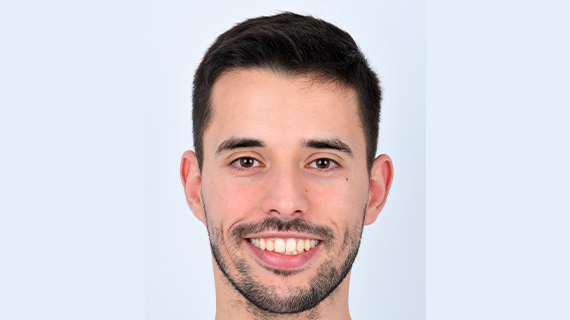
- Integrated Master in Dental Medicine – Faculty of Dentistry, Portuguese Catholic University, Viseu, Portugal.
- Post-graduation in Implantprostheses – Faculty of Dentistry, Complutense University of Madrid, Madrid, Spain.
- Master in Dental Sciences – Faculty of Dentistry, Complutense University of Madrid, Madrid, Spain.
- PhD in Dental Sciences – Faculty of Dentistry, Complutense University of Madrid, Madrid, Spain.
- Master in Reconstructive Dentistry – Faculty of Medicine, University of Geneva, Geneva, Switzerland.
Nationality: Portugal
Scientific areas: Operative Dentistry
6 of november, from 14h30 until 15h05
Auditorium A
Conference summary
This lecture will explore the significant evolution in reconstructive dentistry workflows, focusing on the transition from conventional methods to digital technologies — particularly the use of intraoral and facial scanners.
Traditionally, patient data collection relied on physical impressions, facial bow registrations, and 2D photography — all time-consuming and costly processes. Today, intraoral and facial scanning technologies allow us to create detailed 3D digital models of our patients, enabling more accurate diagnostics and streamlined treatment planning.
We will examine the main types of scanners available, highlighting their clinical advantages, limitations, accuracy, and how to integrate them effectively into practice. Emphasis will be placed on best practices to optimize their use — from data acquisition protocols to enhancing interdisciplinary communication, aesthetic predictability, and overall patient experience.
Finally, we will look ahead to future developments, including the emergence of fully integrated dynamic virtual patients — a concept that is quickly becoming a reality in modern digital dentistry.