Luís Caetano
New trends in the approach to pain: pain diagnosis
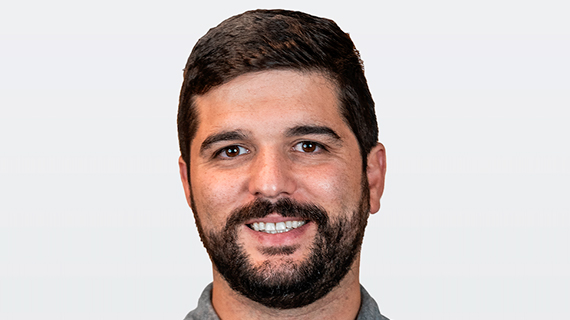
- Integrated Master’s Degree in Dental Medicine – IUCS-CESPU (2010).
- Clinical practice focused on Endodontics since 2011.
- Master’s Degree in Endodontics – International University of Catalonia, (2012–2014).
- Invited Professor in the Department of Conservative Dentistry at IUCS-CESPU since 2015.
- Professor in the Postgraduate Endodontics Program at CESPU since 2015.
- Clinical and Academic Director at the IRON Institute.
- Professor and co-founder of the FromRoots courses in endodontics and advanced endodontics.
- Certified Member of European Society of Endodontics.
- Member of the Portuguese Society of Endodontology.
Nationality: Portugal
Scientific areas: Endodontics
6 of november, from 09h00 until 09h45
Auditorium B
Conference summary
Orofacial pain, especially of dental origin, is one of the main reasons why patients seek dental care.
However, its complexity and the overlap of signs and symptoms among different etiologies make diagnosis a true clinical challenge — often leading to uncertainty among clinicians.
The pressure to provide immediate relief, combined with blind reliance on traditional tests, can result in rushed decisions and irreversible treatments — many of which are unnecessary. This scenario calls for a pause and reflection: why not think before treating?
This lecture proposes a practical and systematic approach aimed at avoiding diagnostic errors. It begins by distinguishing between odontogenic and non-odontogenic pain, with a particular emphasis on pain of endodontic origin. Differential diagnostic protocols will be explored, along with correct interpretations of clinical tests and essential tips to differentiate referred from localized pain — avoiding common pitfalls such as overinterpretation of radiographic findings or misreading pulp and periodontal sensibility tests.
Real clinical cases will illustrate potential diagnostic failures and their consequences, followed by strategies that promote more assertive and evidence-based decision-making.
By the end of the session, participants will gain not only increased confidence in accurate diagnosis but also the ability to provide meaningful relief to patients without resorting to unnecessary treatments. Because knowing how to think before treating is an essential clinical skill — a reflection of both technical excellence and professional maturity.