Leandro Chambrone
Clinical insights about the evolution and long-term stability of root coverage procedures
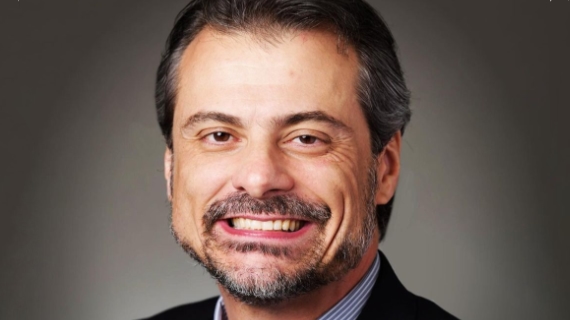
- Leandro Chambrone is a DDS/MSc/PhD with an extensive experience in periodontal and implant-dentistry, oral health research, evidence-based dentistry, editorial / publishing affairs, didactic teaching, and clinical training of predoctoral and postgraduate (MSc and PhD) students.
- He received a DDS and a Certificate in Orthodontics and Dentofacial Orthopedics from Methodist University of São Paulo in Brazil.
- Subsequently, he earned a master’s degree and PhD degree in periodontics from the University of São Paulo.
- He holds positions of Associate Professor at Egas Moniz School of Health & Sciences (Portugal), Ad-honorem Associate Professor at El Bosque University (Colombia), and Adjunct Associate Professor at Penn School of Dental Medicine.
- Beyond his enthusiasm and dedication as an educator and health care provider, Dr Chambrone is also heavily involved in clinical research and evidence-based dentistry. He has published more than 170 manuscripts, 14 book chapters and three textbooks, including 7 commissioned systematic reviews for the American Academy of Periodontology.
- Dr. Chambrone currently serves as Section Editor of Clinical Research for The International Journal of Oral Implantology and Section Editor of Periodontics for the Journal of Esthetic and Restorative Dentistry.
Nationality: Brazil
Scientific areas: Periodontology
7 of november, from 09h00 until 12h30
Auditorium A
Conference summary
Throughout an individual’s lifetime, the pristine periodontal conditions achieved soon after tooth formation and development may undergo alterations in response to various factors such as aging, plaque-induced periodontal diseases, and local or systemic influences.
Among the various changes that can occur in the periodontium over time, mucogingival deformities, which involve the mucogingival complex, have garnered significant attention from both patients and clinicians. Root coverage (RC) and periodontal soft tissue augmentation procedures have long been used for the treatment of gingival recession (GR) and mucogingival deformities around natural teeth.
During daily practice, clinicians are required to deal with diverse clinical scenarios and to provide the most adequate treatment options for each particular condition based on the best evidence available, the clinician’s skills, and the patient’s desires. This course will explore the evolution of evidence-based principles for managing GR and sites lacking keratinized tissue.
During this lecture, participants will:
- Define the main factors influencing the treatment of gingival recession defects according to the different patient-, procedure- and outcome-related factors.
- Translate evidence-based findings to clinical practice, by presenting important aspects related to the evolution of root coverage procedures, based on the role of flap preparation, the use of soft tissue grafts, and additional improvements of surgical principles.
- Identify the influence of the keratinized tissue band on the long-term stability of results achieved by reconstructive soft tissue procedures.