Francisco Caramelo
New trends in orthodontics: AI alongside orthodontics
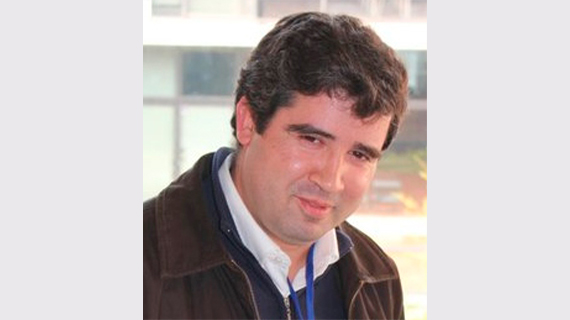
- PhD in Biomedical Sciences with specialization in statistical algorithms and advanced medical image processing.
- University professor for 20+ years in statistics, medical AI, biophysics and bioinformatics at University of Coimbra Faculty of Medicine.
- Technology entrepreneur: co-founder of Spiral Data, a company specialized in applied data science solutions.
- Researcher with 200+ scientific publications and 3000+ citations, developing machine learning algorithms for medical diagnosis and prognosis.
- Proven experience in medical AI: from cancer detection to photorealistic 3D facial reconstruction.
- Research project coordinator applying AI in dentofacial surgery and development of diagnostic tools.
Nationality: Portugal
Scientific areas: Orthodontics
7 of november, from 11h00 until 11h35
Auditorium B
Conference summary
Artificial intelligence (AI) is redefining the boundaries of what is possible in dental medicine, and orthodontics finds itself in a unique position to capitalize on this technological revolution. This presentation offers a balanced perspective on how AI can transform orthodontic practice without replacing professional judgment.
The world of AI is often shrouded in myths and unrealistic expectations. Demystifying these concepts reveals a richer and more fascinating reality: algorithms capable of processing vast amounts of orthodontic data – from complex radiographic images to subtle patterns in digital models – identifying relationships that escape conventional human perception.
Understanding technical fundamentals is not merely academic; it determines the success or failure of clinical implementation. Data quality, algorithmic requirements, and inherent limitations define what can be achieved today and what remains on the horizon. This solid foundation allows for critical navigation between technological promises and clinical reality.
Current AI applications in orthodontics already demonstrate measurable impact on diagnostic accuracy, treatment planning efficiency, and objective monitoring of therapeutic progress. Practical experience in developing these tools reveals both notable successes and unexpected challenges, providing a realistic view of current capabilities.
The future promises even more disruptive developments. Generative AI is opening unprecedented possibilities in outcome simulation, while integration with emerging technologies suggests a paradigm where treatment personalization reaches unparalleled levels. Intelligent automation of clinical processes can free up time for what truly matters: the doctor-patient relationship and complex decision-making.
The transition to AI-assisted orthodontic practice is not inevitable, but rather a strategic choice. This choice requires understanding ethical implications, knowledge of technological limitations, and above all, clarity about AI’s role as a tool for enhancement – not replacement – of clinical competence.
The convergence between artificial intelligence and modern orthodontics creates unique opportunities to redefine standards of care. However, the true potential of this convergence is only realized when technology serves medicine, and not the other way around.
This presentation aims to equip professionals with the knowledge necessary to navigate this transformation consciously and strategically, always maintaining focus on clinical excellence and patient well-being.