Eduardo Montero Solís
What happens when orthodontics and implantology work hand in hand
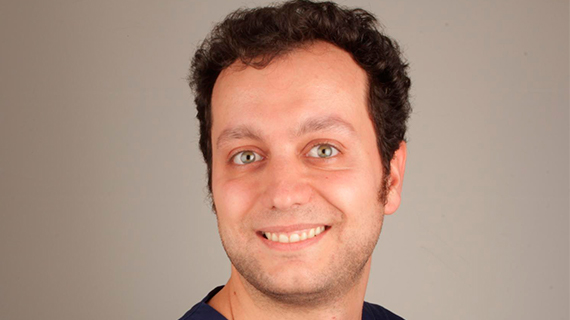
- Degree in Dentistry. Universidad Complutense de Madrid (UCM).
- Master of Science in Periodontology and Implant Dentistry (UCM).
- Certificate of Completion of Specialised Training (CCST) in Periodontology by the European Federation of Periodontology (EFP).
- PhD with International Mention (UCM) and Extraordinary Prize of doctorate.
- Postgraduate Diploma in Statistics in Health Sciences and Master in Research Methodology. University Autonoma of Barcelona (UAB).
- Associate Professor of Periodontology. Faculty of Dentistry (UCM).
- Secretary of the Working Group of the Spanish Society of Periodontology (SEPA) and the Spanish Society of Diabetes (SED).
- Member of the Experts Council of the Osteology Foundation and Member of the Education Committee of the European Association of Osseointegration (EAO).
- Awarded with the Sigmund Socransky Investigator Award by the International Association of Dental Research (IADR).
- Clinical practice limited to periodontology and implant dentistry in Madrid, Spain.
Nationality: Spain
Scientific areas: Dental Industry Forum (Nobel Biocare)
6 of november, from 09h00 until 13h00
Dental Industry Forum
Conference summary
This 3-hour course delves into the multifaceted interrelationship between orthodontics and periodontics, with a strong emphasis on interdisciplinary treatment planning in contemporary dental practice.
It explores how integrated approaches not only optimize esthetic and functional outcomes but also expand therapeutic possibilities, especially in complex adult cases.
The course will examine how orthodontic tooth movement interacts with the periodontal apparatus and how this interplay informs decisions regarding timing, sequencing, and risk management in patients with compromised periodontal health.
Special attention will be given to the integration of implant therapy within the orthodontic-periodontal continuum, including site development through orthodontic extrusion or intrusion, space management, and the role of orthodontics in achieving ideal implant positioning.
Attendees will explore the critical role of periodontal and peri-implant plastic surgery in achieving esthetic outcomes, with focus on soft tissue augmentation, root coverage procedures, and the preservation or enhancement of the periodontal phenotype prior to, during, or after orthodontic and implant therapy.
The course also introduces participants to Periodontally Accelerated Osteogenic Orthodontics (PAOO), including piezoincisions and concomitant soft and/or hard tissue grafting for phenotype modification.
This biologically driven technique not only shortens treatment time but also enhances periodontal health and stability, making it especially valuable in adult patients or those with thin phenotypes.
Clinical case presentations and evidence-based discussion will guide practitioners in effectively coordinating interdisciplinary care.
Learning objectives:
- analyze the bidirectional relationship between orthodontic forces and periodontal tissues in health and disease;
- plan interdisciplinary cases involving orthodontics and implant therapy, with appropriate timing and sequencing;
- understand indications, techniques, and outcomes of periodontal and peri-implant plastic surgery in the context of orthodontic treatment;
- integrate PAOO, including piezoincisions and soft tissue phenotype modification, to enhance periodontal stability and accelerate orthodontic movement;
- evaluate clinical cases demonstrating the synergy between orthodontics, periodontics, and implant therapy.
See the other speakers at the Industry Forum.
Bronze Sponsor