Ana Nogueira
New trends in Operative Dentistry: "toys or tools"? The use of lasers in operative dentistry
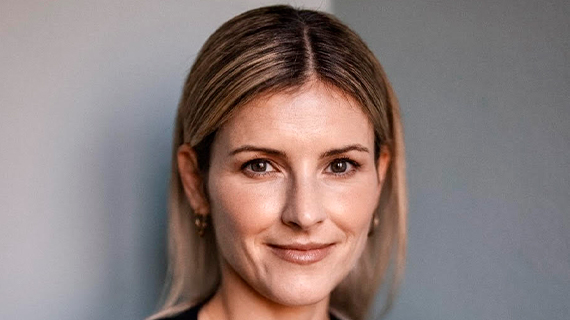
- Professor Ana Catarina Nogueira da Silva earned her degree in Dental Medicine from the Faculty of Dental Medicine, University of Porto, where her academic path began.
- Specialisation in Laser Dentistry followed, with both a Mastership and MSc in Lasers in Dentistry completed at RWTH Aachen University, Germany.
- The academic journey also includes the EMDOLA – European Master Degree in Oral Laser Applications, a benchmark in laser dentistry training.
- A PhD from the University of Porto was later completed, focusing on the clinical use of laser technology in dental practice.
- Currently Professor of Operative Dentistry at the University of Porto, combining teaching with research in dental laser applications.
- Founder and director of Portugal’s first Institute of Laser Dentistry, promoting advanced education in this innovative discipline.
- Published author of numerous scientific articles and frequent keynote speaker at leading dental congresses, both nationally and internationally.
- Member of the General Council of the Portuguese Dental Association and Portugal’s official ambassador to the International Society for Laser Dentistry.
- Led the Organizing Committee for the 19th ISLD World Congress, held in Porto in 2024, a landmark event in the field.
- Now part of the Scientific Committee for the 20th ISLD World Congress, to be held in Dubai in 2026, reinforcing her global recognition.
Nationality: Portugal
Scientific areas: Operative Dentistry
6 of november, from 18h05 until 18h40
Auditorium A
Conference summary
The introduction of laser technology in dentistry represents a milestone of innovation with significant impact on clinical practice. From its theoretical conceptualization by Albert Einstein in 1917 to the creation of the first functional laser by Theodore Maiman in 1960, the development of this technology has been continuous and progressively integrated into various fields of medicine, including dentistry.
In the 1960s, lasers began to be studied for medical and surgical applications, but it was only in 1989 that the first laser approved for use on hard tissues in dentistry — the Er:YAG — became available. Since then, technological advancements have led to the introduction of various types of lasers — namely Nd:YAG, CO₂, diode, and Er,Cr:YSGG — each with specific characteristics and distinct clinical indications.
This presentation aims to address the use of lasers in dentistry, particularly in operative dentistry, with special emphasis on their clinical applications, selection criteria, and the available scientific evidence. The main wavelengths used in dental practice — namely Erbium lasers (Er:YAG, Er,Cr:YSGG), Nd:YAG, CO₂, and diode lasers — will be presented, along with an explanation of their mechanisms of action, interaction with dental tissues, and the clinical impact of selected parameters.
The selection of the most appropriate laser will be discussed according to the type of treatment, taking into account factors such as the target tissue, desired depth of action, thermal effects, and specific clinical goals. The main advantages of laser use will also be highlighted, such as reduced vibration, decreased need for anaesthesia, and increased patient comfort, as well as associated limitations, including the required investment and the learning curve.
From a scientific perspective, the presentation will explore the impact of laser use on the dental tissues and on adhesion of restorative materials to dental structures, with particular focus on dentine. Studies will be presented demonstrating how laser irradiation alters dentine surface morphology and collagen structure. Comparisons between laser cavity preparation and conventional methods will also be discussed, highlighting their implications for bond strength and restoration longevity.
This presentation aims to contribute to a critical, up-to-date, and evidence-based understanding of the role of laser technology in contemporary operative dentistry.