Vasco Nunes da Silva
Operative dentistry and orthodontics: how to obtain a symbiotic relationship
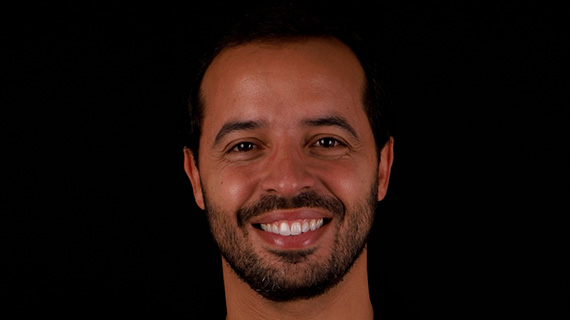
- Master’s degree in Dental Medicine from the Instituto Superior de Ciências da Saúde Egas Moniz (ISCSEM) in 2012.
- Assistant Professor in the Curricular Unit of Conservative Dental Medicine I and II at the Instituto Superior de Ciências da Saúde Egas Moniz (ISCSEM), from 2014 to 2020.
- Postgraduate in Orthodontics Instituto Eduardo Prado, Lisbon, Portugal, in 2015.
- Postgraduate FACE/Roth-Williams Multidisciplinary Advanced Orthodontics, in 2016.
- Professor of postgraduate advanced biomimetic oral rehabilitation, from the Biomimetic Dentistry Portugal group at the Cooperativa De Ensino Superior Politécnico Universitário (CESPU).
- Member and guest speaker for the international groups Bio-emulation and Be International Dental Expert (BeIDE).
- Invited Professor of the Advanced Master of Periodontics and Implantology in Madrid.
- Professor of modular courses related to operative dentistry and composite resin rehabilitation.
Nationality: Portugal
Scientific areas: Operative Dentistry
21 of november, from 14h30 until 15h00
Auditorium C
Conference summary
Multidisciplinary treatments, involving different areas of specialization, should not be the exception but rather the rule, despite the difficulty for the clinician to simultaneously master themselves such demanding disciplines.
Contemporary operative dentistry is not limited to the treatment of caries, but also to the rehabilitation of the tooth in its context, that is, restoring its function, its shape, its stability, its appearance and its relationship with the adjacent structures, dental or not; but simultaneously preserving the dental tissue as much as possible, often only possible by making use of multidisciplinary knowledge and techniques that enable the desirable ultra-conservative attitude.
One of them is certainly the use of orthodontics as a clinical tool, either to compensate for excess spaces resulting from Bolton discrepancies, or to correct poor dental positions resulting from early loss of teeth, among many other indications, which limit restorability or compromise its aesthetic-functional success.
It is my desire with this humble presentation to encourage colleagues to combine these two tools, without the need to specialize academically in both, rather making use of practical and simple, yet demanding and rigorous prerogatives and tips, in order to provide their patients with more harmonious, conservative, functional and aesthetic treatments.