Hossam Dawa
Artificial Intelligence and dentistry
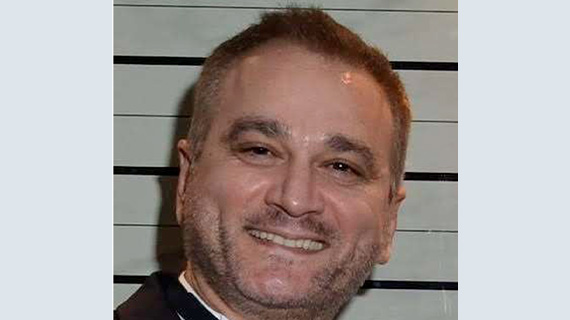
- PGD Degree in Aesthetic Dentsitry 2009-2011 King´s College of London, UK.
- DDS Degree recognition/Equivalence (2002), University of Porto, Portugal.
- Master of Medical Science MMSci in Oral Surgery (1999-2001), University of Sheffield, UK.
- DDS Degree (1994), University of Damascus, Syria.
- Coordinator of the Digital Dentistry Post-Graduate program, CESPU University, Portugal (2019-present).
- Specialist Oral Surgeon at the College of Oral Surgeons, Portugal (2017-present).
- Member of UNIPRO- Oral Pathology and Rehabilitation Research Unit, University Institute of Health Science (IUCS), CESPU, Gandra, Portugal.
- Member of Artificial Intelligence Applied to Health Science —Unit of Research in Artificial Intelligence Applied to Health, Instituto Politécnico de Saúde do Norte, CESPU, Rua José António Vidal, 81, 4760-409 Famalicão, Portugal.
- Member of the Society for the Advancement of Anaesthesia In Dentistry, UK.
Nationality: Portugal
Scientific areas: In Our Agenda (Artificial Intelligence and dentistry)
22 of november, from 17h30 until 19h00
Innovation Box Area
Conference summary
It’s an undeniable fact: artificial intelligence (AI) is increasingly a part of our daily lives, and dentistry is no exception, taking advantage of what best AI has to offer.
In recent years, there have been many technological advances that dentistry has tried to keep up with, whether it is in aiding diagnosis, establishing a treatment plan or in the techniques adopted to provide a more effective service.
Examples such as intraoral scanning and other equipment or software are already a reality in which AI plays a fundamental role. AI is also proving to be very useful in team and clinic management and in optimising results. However, we are still at the beginning of a long journey in exploring the potential of this powerful tool.
If, on the one hand, it represents advances that were once unimaginable, AI may cause ethical constraints for the practice of dentistry and raise questions about the limits to its use, in the conflict between clinical decision-making and the human aspect. How far can artificial intelligence take us in dentistry?