Carlos Palmeira
Hands-on (OMD) | Oral medicine
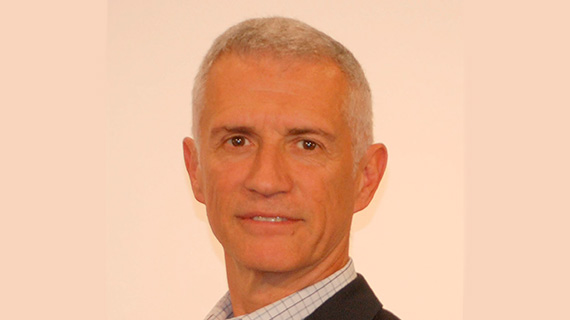
- Carlos Palmeira graduated in Biology (1988), did an MSc in Oncology (1998) and PhD in Biomedical Sciences (2010), at Universidade do Porto. Since 2004, he has been a lecturer at Fernando Pessoa University.
- He’s Professor Coordenador, teaching on the Integrated Masters in Medicine, Dentistry, and in the 1st Cycle of the degrees in Biomedical Laboratory Sciences, Physiotherapy and Speech Therapy.
- He has been responsible for some curricular units and is now member of the ESS-FP Pedagogical Council.
- At the same time, he has been working at IPO-Porto for the past 32 years. Initially at the Pathological and Genetics Services, now at the Immunology Service, where he has been since 2003 as a specialized Biomedical Scientist in clinical analysis.
- In addition to the clinical laboratory activity, he participates in undergraduate and postgraduate training for Medical and Biomedical Science students. He is also a member of the Board of the Department of Pathology and Laboratory Medicine.
- As a member of the Research Center IPO-Porto Experimental Pathology and Therapeutics research group, and a collaborator of the I3ID FFP Research Centre of Universidade Fernando Pessoa he supervises PhD and Msc students.
- His research interests are mainly focused in immunology, histology, tumorigenesis, immunotherapy, cell cycle analysis, and animal experimentation models, and has authored or co-authored several research contributions.
Nationality: Portugal
Scientific areas: Hands-on (OMD)
22 of november, from 09h30 until 13h00
Room 3
Conference summary
Edge cases of oral pathology – what can be done?
This hands-on course will feature complex and atypical cases of oral pathology. Real cases will be discussed and the themes will be diverse: patients ongoing cancer treatment, oral cancer diagnosis, trigeminal neuralgia and odontogenic cysts. Participants in the workshop will be guided by experts in different fields who will motivate the participants and it is expected that all share their ideas, pose questions, offer solutions and challenge each other for a constructive case discussion.
Additionally, the brainstorming exercise will also focus on communication skills (with patients and colleagues), how to deal with stressful situations and to best make a decision taking into account ethical issues – these aspects are all fundamental during daily practice.
During the workshop the participants will have the opportunity to use digital resources, to consult clinical and iconographic documents, and they will have access to online databases where the most up to date scientific literature can be consulted to support the discussion.
The interaction between participants and the practical exercises will be a great asset for those looking for excellence in their daily practice.