Alfonso Caiazzo
Approach to the post-extractive site in the modern clinical practice
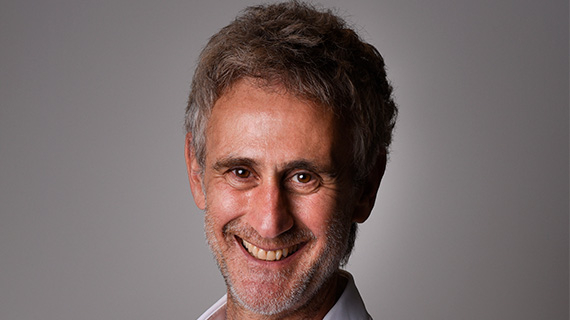
- Dental degree at the University of Naples, Italy, in 1991.
- Residency program in Oral and Maxillofacial Surgery at TUFTS University in Boston, USA, from 1993-1997.
- Clinical instructor at the TUFTS University in Boston, USA, in the department of oral surgery in 1998.
- Fellowship in Implant dentistry at the New York University, New York, USA, from 1997 to 1999.
- Clinical Assistant Professor of Oral & Maxillofacial Surgery in the Henry M. Goldman School of Dental Medicine (Boston University).
- President Elect of the Italian Society of Oral Surgery and Implant Dentistry (SICOI) in 2015-2016.
- Founding member of the IAO (Italian Academy of Osteointegration).
- Vice President IAO (Italian Academy of Osteointegration) in 2017-2018.
- President IAO (Italian Academy of Osteointegration) in 2019-2020.
- Certified in Wilckodontics.
- Fellow of the European Federation of Oral Surgery Societies (EFOSS).
- Founding member of the European Society of Dental & Craniofacial Stem Cells (ESDCSC).
- Co-editor of the book Orthodontically Driven Corticotomy, Wiley-Blackwell 2015.
- Co-author of the chapter Implant dentistry in Oral Surgery for the General Dentist, Wiley-Blackwell 2015.
- Author of several articles in International Journals.
- Editorial Board member of Advances in Dentistry and Oral Health (ADOH).
- His office is located in Salerno, Italy, and his practice is limited to oral surgery and Implant dentistry.
Nationality: Italy
Scientific areas: Oral Surgery
21 of november, from 09h00 until 10h30
Auditorium B
Conference summary
Cell occlusive membranes alone or in combination with different bone grafting have been used extensively to enhance healing of extraction sockets and to prevent ridge collapse prior to placement of dental implants. However, bone grafting may interfere with the self-healing process of the socket which will take longer. The use of a membrane (according to the GBR principle) may require a more sophisticated surgery at the time of extraction as well as an extended period of healing to obtain proper maturation of the regenerated area.
This lecture aims to review the literature of socket preservation, its real indications, and will also analyse the different techniques and materials used in such a regenerative procedure. During the course, different techniques will be illustrated to achieve excellent aesthetic and functional results.
By the end of the course all participants, either GPs or specialists, will be able to better understand the biological process of socket healing and be accustomed to using a new tool in their everyday practice.
Managing extraction sockets in the anterior maxilla is still a problem that dentists are facing on everyday basis. Many techniques on how to counteract a possible resorption of the alveolus are known. Some of these may require specific clinical skills. Others may necessitate a longer period of treatment.
The lecture will illustrate which procedure may help to facilitate the management of these clinical case scenarios, with minimal interference to the natural healing time of a socket.