Lorenzo Tavelli
Periodontology | Workshop
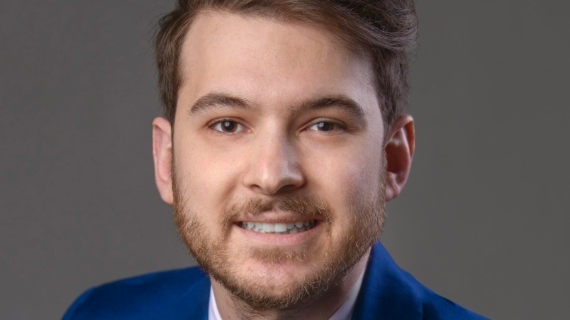
- DDS, MS is full-time assistant professor at the Department of Oral Medicine, Infection, and Immunity, Division of Periodontology at the Harvard School of Dental Medicine, Boston.
- He graduated from the University of Milan and then he completed his residency and Master of Science in Periodontics at the University of Michigan.
- His main focus in clinical research and daily practice is microsurgical and minimally invasive soft tissue grafting procedures around teeth and dental implants, where he has been pioneering the use of novel technologies – such as Power Doppler Ultrasonography.
- He has been extensively lecturing worldwide on these topics at the main scientific symposia.
- He has published more than 90 scholarly publications in the main international peer-reviewed journals, and he was the recipients of several research awards, including the 2022 Nevins Clinical Research Fellowship from the American Academy of Periodontology, and the 2021 Goldman Clinical Research award from the Italian Society of Periodontology, among others.
Nationality: Italy/ USA
Scientific areas: Periodontology (workshop)
10 of november, from 14h30 until 19h00
Room 1
Conference summary
The Tunneled Coronally Advanced Flap (TCAF)
(2h30 PM – 04h00 PM)
Coronally advanced flap and tunnel techniques are the two most utilized surgical approaches for root coverage procedures. The local characterizes of the surgical site may suggest the execution of one technique or the other.
This lecture will discuss complexity and difficulty factors for coronally advanced flap and tunnel techniques, and will introduce a novel treatment approach involving their combination: the Tunneled Coronally Advanced Flap (TCAF). The rationale, advantages, and expected outcomes of the TCAF will be presented in detail through a series of cases depicting different TCAF designs, and the combined use of autogenous grafts and substitutes.
Implant esthetic complications.
(5h30 PM – 07h00 PM)
Millions of implants are placed every year, with many of them located in the anterior region.
Nowadays, patients’ esthetic demands have significantly increased that even a little discrepancy between the implant-supported crown and the homologous tooth, or even a slight discoloration of the soft tissue around the implant may impair patients’ satisfaction and perception of implant therapy.
A recent classification of peri-implant soft tissue dehiscences has been proposed with the goal of providing a uniform system for the diagnosis of these conditions, and, at the same time, guiding clinicians on the selection of the most indicated treatment approach for each type of esthetic complication.
This lecture will focus on the concept of peri-implant soft tissue phenotype for the long-term stability of the soft tissue margin and esthetic outcomes, and will provide participants with the treatment rationale for treating peri-implant soft tissue dehiscences through clinical cases and scientific literature.