Vincent Fehmer
Management of Withe and Pink Esthetics - an interdisciplinary approach
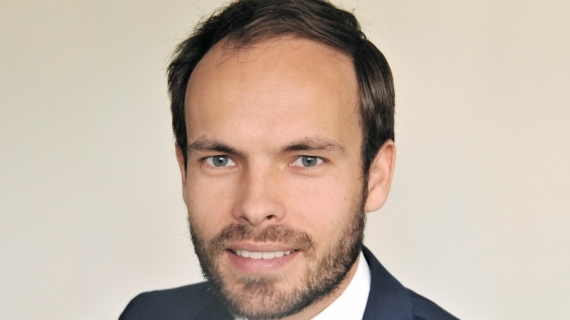
- Master Dental Technician (MDT), Clinic for Fixed Prosthodontics and Biomaterials, Center for Dental and Medicine, University of Geneva, Switzerland (Head: Prof. Dr. I. Sailer)
- Dental Technical Education and degree, Stuttgart, Germany, 2002
- Fellowships in Great Britain and the US in Oral Design certified dental technical laboratories, 2002-2003
- Work at Oral Design certified laboratory in Berlin, Germany – The Dental Manufaktur Mehrhof, 2003-2009
- MDT, Germany, 2009
- Clinic for Fixed and Removable Prosthodontics (chief dental technician), Zurich, Switzerland, 2009-2014
- Dental Technician at the Clinic for Fixed Prothodontics and Biomaterials in Geneva, Switzerland and runs his own laboratory in Lausanne Switzerland, 2015-present
- Fellow of the International Team for Implantology; active member of the European Academy of Esthetic Dentistry (EAED); member of the Oral Design group, European Association of Dental Technology (EADT) and German Society of Esthetic Dentistry (Deutsche Gesellschaft für Ästhetische Zahnheilkunde, DGÄZ)
- Active as speaker on a national and international level
- Received honors like the KENNETH RUDD AWARD, American Prosthodontic Society
- Numerous articles within the field of fixed prosthodontics and digital dental technology
- Editor in Chief of the QDT Yearbook; Co-Editor in Chief for the International Journal of Esthetic Dentistry; Section Editor for the International Journal of Prosthodontics.
Nationality: Switzerland
Scientific areas: Fixed prosthesis and biomaterials
19 of november, from 09h00 until 12h30
Auditorium A
Conference summary
The recent digital technology offers numerous new and efficient options for planning and conducting implant and restorative treatments.
Within digital dentistry cone beam CT scanning and optical impressionning are the first steps towards a digitalization of the patient’s intraoral situation.
The resulting digital files are then used for the virtual planning and guiding implant placement.
The main goal is to initially define and later on follow a systematic and evidence based treatment plan, in simple as well as more complex dental rehabilitations.
In the restorative phase digital dentistry is used to virtually design reconstructions, which thereafter can be milled out of prefabricated blanks of different materials with aid of CAD/CAM systems.
Evenmore, these CAD/CAM reconstructions can either be made in a centralized production facility or chair-side in the dental office.
A high number of studies has demonstrated good accuracy of the current subtractive manufacturing, i.e. the computer-aided milling or the grinding of ingots.
More recently, additive procedures have been introduced. Stereolithography, laser sintering or printing of materials like wax, resins or metals has shown to be even more efficient than the subtractive manufacturing.
Finally, the “digital workflow“ and the associated additive procedures, is not only interesting for the planning and fabrication of implant reconstructions but also for a better patient/dentist communication.
As an example, 3D prosthetic diagnostic files of digital wax-ups or set-ups may be printed out of resin and used for try-in in the clinical situation.
Scientific Sponsor