Luís França Martins
The evolution of efficiency and safety and three - dimensional obturation
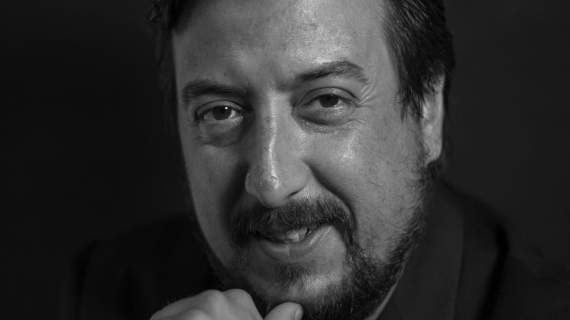
- Degree in Dentistry, year 2008
- Master’s Degree in Dentistry with focus and research in the field of Endodontics, year 2012
- University Lecturer at the Faculty of Health Sciences – UFP, since 2009, teaching in the
following curricular units: Endodontics, Conservative Dental Medicine, General Surgery and
Anesthesiology, Dental Materials, Integrated Clinic for Special Patients - Professor of the Postgraduate Course in Clinical Skills at the Faculty of Health Sciences – UFP
- Exclusive international clinical practice in the area of Endodontics and Endodontic
Microsurgery, since 2009 - Several participations as a speaker and trainer in organizations of the Portuguese Dental
Association, namely in editions of Continuing Education of the Portuguese Dental Association
in the field of Endodontics - Several participations in meetings, conferences and scientific events, as a speaker and speaker,
at national and international level, namely in Portugal, Spain, Switzerland, Hungary, Turkey,
Guinea-Bissau and Angola - International medical device patent holder in the field of Endodontics named by IRRIGUN and
main investigator on another device project pending Patent approval - Founding member of companies and private training teams in the field of Endodontics,
nationally and internationally - Researcher and Content Producer, Medical Informatics Company and Clinical Decision Support
Software Development NETMEDICIS - Author and co-author of several scientific and research works in the field of Endodontics and
Oral Microbiology, as well as advisor and co-author of more than 30 Master’s Theses in the
field of Endodontics
Nationality: Portugal
Scientific areas: Hands-on
18 of november, from 14h30 until 18h00
Room 6
Conference summary
The constant evolution of scientific knowledge and the current approach to dentistry,
combined with current socio-economic trends, often place the dentist in the face of the need to perform endodontic treatments of greater risk and complexity, complying, however, with the requirement of the most high standards of success and predictability of results.
The RACE® EVO instrumentation system presents itself as a solution capable of satisfying the most demanding quality standards, combined with fundamental efficiency, simplicity and safety, even in cases of high difficulty.
Based on a long and proven knowledge and experience, this system today brings together the fundamentals that have given it its relevance as a clinical tool, together with innovations that guarantee better performance in terms of reducing the
risk of intraoperative separation of instruments and cyclic fatigue, greater flexibility for more
challenging anatomies, among other characteristics, ensuring greater predictability of results and guarantee of treatment success.
This system also has the possibility of creating an individualized protocol for each clinical case or professional’s taste and preference, since it offers a variety of solutions regarding apical gauges and conicities of the instruments that constitute it.
Likewise, the ultimate tool that completes the process of eliminating bacterial contamination and preventing recontamination of the three-dimensional canal system in endodontic treatment is an effective, complete and three-dimensional obturation and sealing of the complex geometry of the intracanal space.
The most recent studies point to bioceramic
materials as the most complete and effective typology of filling cements as part of this canal
filling process.
This sealant, which has radiopacity, allows good radiographic control, and also has the ability to induce the formation of hydroxyapatite chemically bonding to dentin.
TotalFill® BC Sealer also has a desirable feature in the primary objective of eliminating the invasive microbiota
from the canal system, which is linked to its antibacterial capacity, due to its alkaline pH, as
well as its chemical property that guarantees stability. dimensional after placement, due to
virtually zero shrinkage or shrinkage after the setting and stabilization process.
Scientific Sponsor