José Camelo Ferreira
Bone Graft Cement – An “out of the box” approach to perform complex or simple bone augmentation or reconstruction procedures
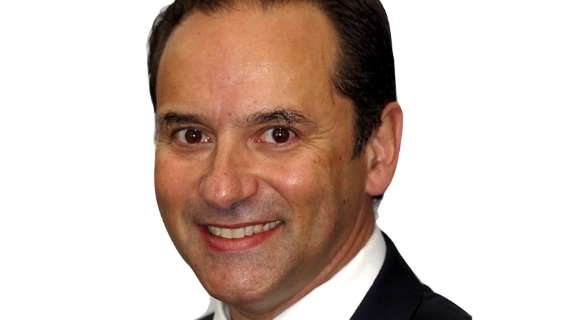
- José Camelo Ferreira lives and works in the Algarve where he performs oral surgery and oral rehabilitation. He has been a member of the PDA since 1998, the year he graduated in Dentistry at ISCS Sul
- From 2001 to 2002, he took a postgraduate degree in Implantology in Madrid. Since 2011 he has been a speaker for Nobel Biocare and since 2014, he is an associate member of the FOR (Foundation for Oral Rehabilitation)
- In 2015, he did a postgraduate course in Advanced Implantology in São Paulo, with Professor Alexander Salvoni, where he continued to study Advanced Rehabilitation and Zygomatic Implantology, from 2016 to the present
- In 2017, he was awarded the title of Specialist in Oral Surgery by the PDA. Also in 2017, he was invited to be in charge of the SmailTube.tv courses in Portugal, an entity that offers online and practical implantology courses throughout Europe and the United States of America
- In 2019, he received the title of Surgical Master in Regenerative Implantology at the University of Szeged in Hungary by Prof. Istvan Urban
- He is currently a visiting professor in several advanced surgery courses in Portugal and Brazil
Nationality: Portugal
Scientific areas: Hands-on
18 of november, from 14h30 until 18h00
Room 5
Conference summary
“Simplicity is the ultimate sophistication”
The objective of this theoretical-practical course is to introduce the concept of bone cement (Biphasic Calcium Sulfate), the reasons behind its surgical protocols, its properties and the new surgical possibilities that we face in its use. The differences between the use of bone cement and the traditional grafting methods challenge existing paradigms in the field of guided bone regeneration (GBR). Now, we can use minimally invasive protocols without using membranes, without manipulation or distortion of soft tissues, as tension-free flaps are no longer mandatory. Bone Graft cement allows us to face with confidence and simplicity almost all cases of bone augmentation, from the simplest to the most complicated, providing us with protocols that ensure simplicity, safety and predictability of results.
This course will focus on specific procedures and protocols for the use of bone cement in different types of bone augmentation surgery. The participant will learn to manipulate the surgical flap in order to keep the surgery minimally invasive and to be able to close flaps while maintaining tension (unlike the traditional GBR techniques). You will also learn to work without having to use membranes, without having to completely close the flap, and to understand and avoid the muscular relationship with the movement of the flap. Participants will learn to be able to predict the final outcome of the surgery, while avoiding the most conventional post-surgical complications.
Learning objectives:
• How to manipulate the flap as little as possible, improving the final results;
• How to eliminate the muscular influence on the stability of the flap;
• Applications, techniques and protocols of bone cement;
• Suturing and flap closure techniques using bone cement;
• How to predict the best final results during surgery.
Scientific Sponsor